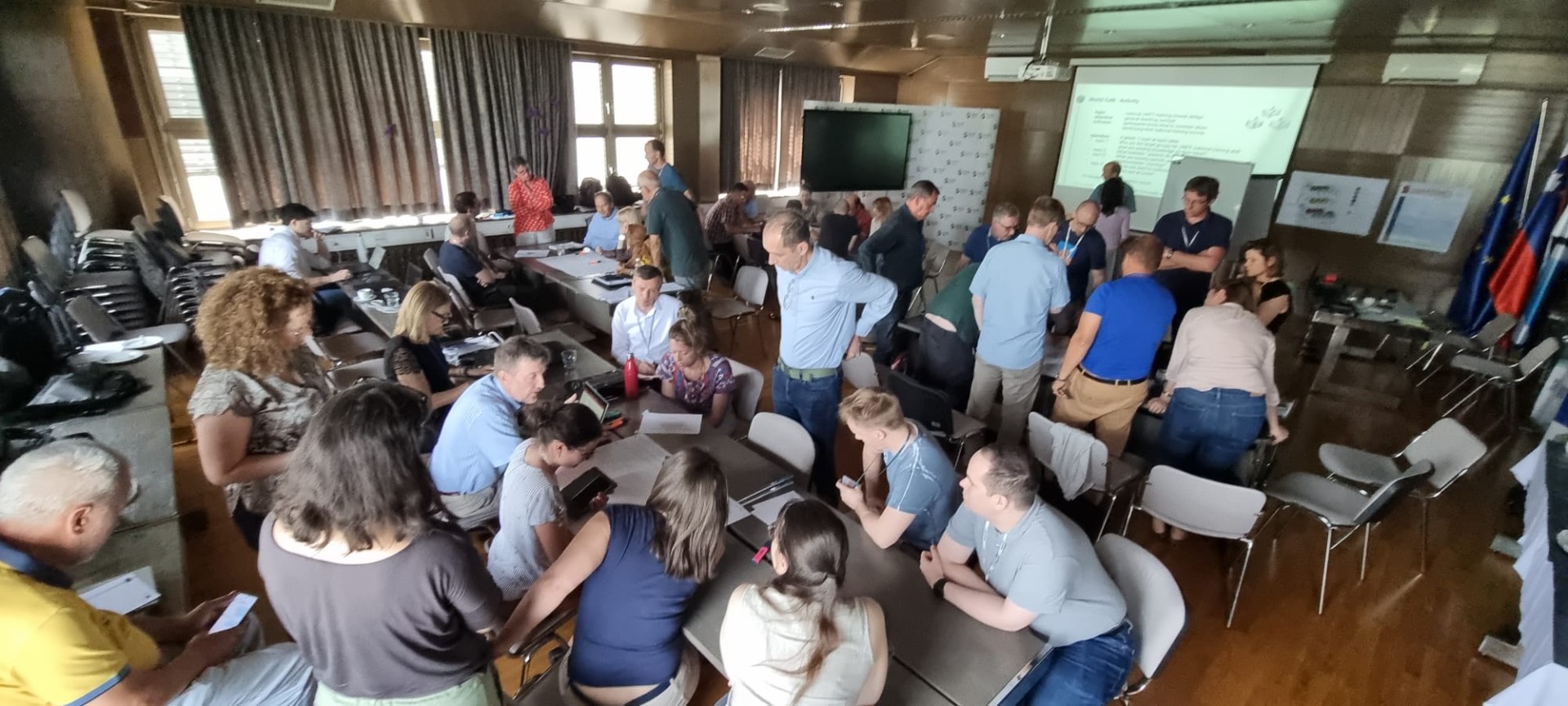
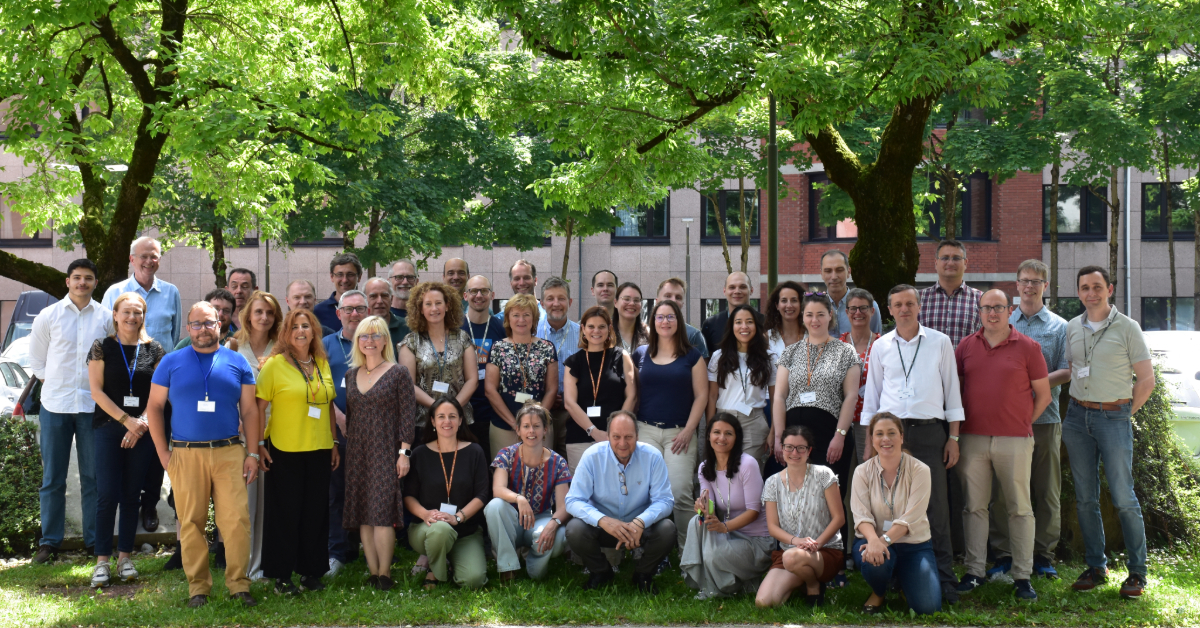
GSEU/ EU ICE SRM UNFC Training - level 3

June 18 – 19, 2024 | Ljubljana
Add to calendar

The main aim and focus of the trainings is to support critical raw material initiatives (CRM Act) to classify projects using UNFC and establish project inventories across Europe.

A program of systematic capacity building ensures that synergies are retained between the EU Member States and data on raw materials are collected consistently, and are of the required quality, across Europe. The development of UNFC capacity within the EU ICE SRM serves to facilitate and improve the handling and understanding in particular to: 

  • the further development of UNFC classified inventories across Europe that are consistent with the Infrastructure for Spatial Information in Europe (INSPIRE) for mineral resources;
  • the comparability in national resource reporting, in particular the way resource quantities are classified according to UNFC and linked to different EU instruments, such as INSPIRE.

The EU ICE SRM is taking a step-by-step approach to increase the necessary capacity in all related areas, starting with CRM.

Our first target group are experts who are trained to become trainers. The trainings will be implemented in three level approach.

Level 3 – Qualification (suitable for trainers, builds up on Level 2 training)

Topics:

  • Clearing up open issues
  • Handling data and issues on data coherently
  • UNFC data outputs in accordance with CRMA
  • Develop responses for Q&A
  • Hand-on exercise / presentations and discussions on trainees findings
  • Final exam for certificates

Training materials

Recap of Level 2 Training (Snježana Miletić, GeoZS)

Risks and efforts (Janne Hokka, GTK)

How to teach (Sebastian Pfleiderer, GSA)

Development of UNFC guidance on national level​ (Zoltán Horváth, SARA)

Recap of Level 3 Training

Please contact [email protected] for more information about the training.
Back

What's New

External
  Event
Oct 20–22
October 20 – 22, 2026Sevilla, Spain
MORE
External
  Event
Nov 3–4
November 3 – 4, 2026Brussels, Belgium
MORE
External
  Event

7th EAGE Global Energy Transition Conference & Exhibition

November 2 – 6, 2026Hannover, Germany
External
  Event

IAH 2026 World Groundwater Congress

September 14 – 18, 2026Budapest, Hungary
External
  Event

World Water Week 2026: Water for People and Progress

August 23 – 27, 2026Stockholm, Sweden
October 12, 2026

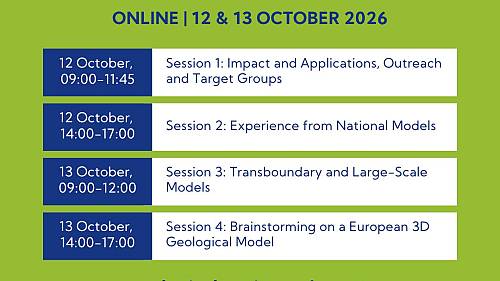
📢 Starting today: our 2-day online workshop Towards a 3D Geomodel of Europe is bringing together experts to discuss the future of geological modelling across Europe. No registration needed! Join us using the Teams links in the programme: https://lnkd.in/dRn7mfEN

Show post on LinkedIn
October 7, 2026

📢 Join our online workshop 𝐓𝐨𝐰𝐚𝐫𝐝𝐬 𝐚 3𝐃 𝐆𝐞𝐨𝐦𝐨𝐝𝐞𝐥 𝐨𝐟 𝐄𝐮𝐫𝐨𝐩𝐞 next week! Interested in how we can move towards a harmonised 3D understanding of Europe's subsurface? Join a stellar lineup of experts to explore national and transboundary experiences and the challenges of scaling up to Europe. Expect g...

Show post on LinkedIn
October 6, 2026

🌍 Europe’s geodiversity is remarkable, and it is fundamental to our future. As Europe advances towards climate neutrality and strategic autonomy, understanding and responsibly managing our geological richness is more important than ever. Our contribution? Bringing together geological knowledge fr...

Show post on LinkedIn
October 3, 2026

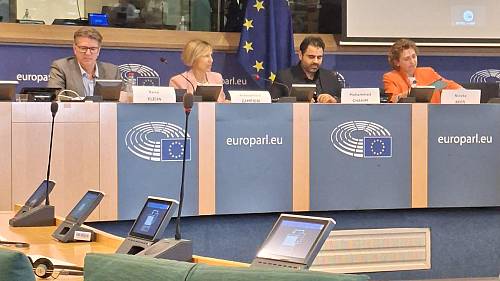
It was a great experience participating in the event "Leveraging Raw Materials to Strengthen EU Sustainable Competitiveness and Business Opportunities" at the European Parliament, hosted by Mohammed Chahim. There were many insightful discussions moderated by Félix Fernández-Shaw Toda. However, tw...

Show post on LinkedIn
September 23, 2026

🌊 For the first time, coastal land subsidence has been assessed at the scale of Europe. This new study from our Coast & Sea Team in collaboration with Coastal Climate Core Services (CoCliCo) reveals how Europe’s low-lying coastal areas are moving, and what this could mean for relative sea-level r...

Show post on LinkedIn
September 11, 2026

What lies beneath Europe’s sinking ground? Land subsidence is becoming increasingly visible across Europe. New research examines how better monitoring, shared data and a deeper understanding of the subsurface can help assess and manage its impacts. Satellite radar has changed the way researchers ...

Show post on LinkedIn