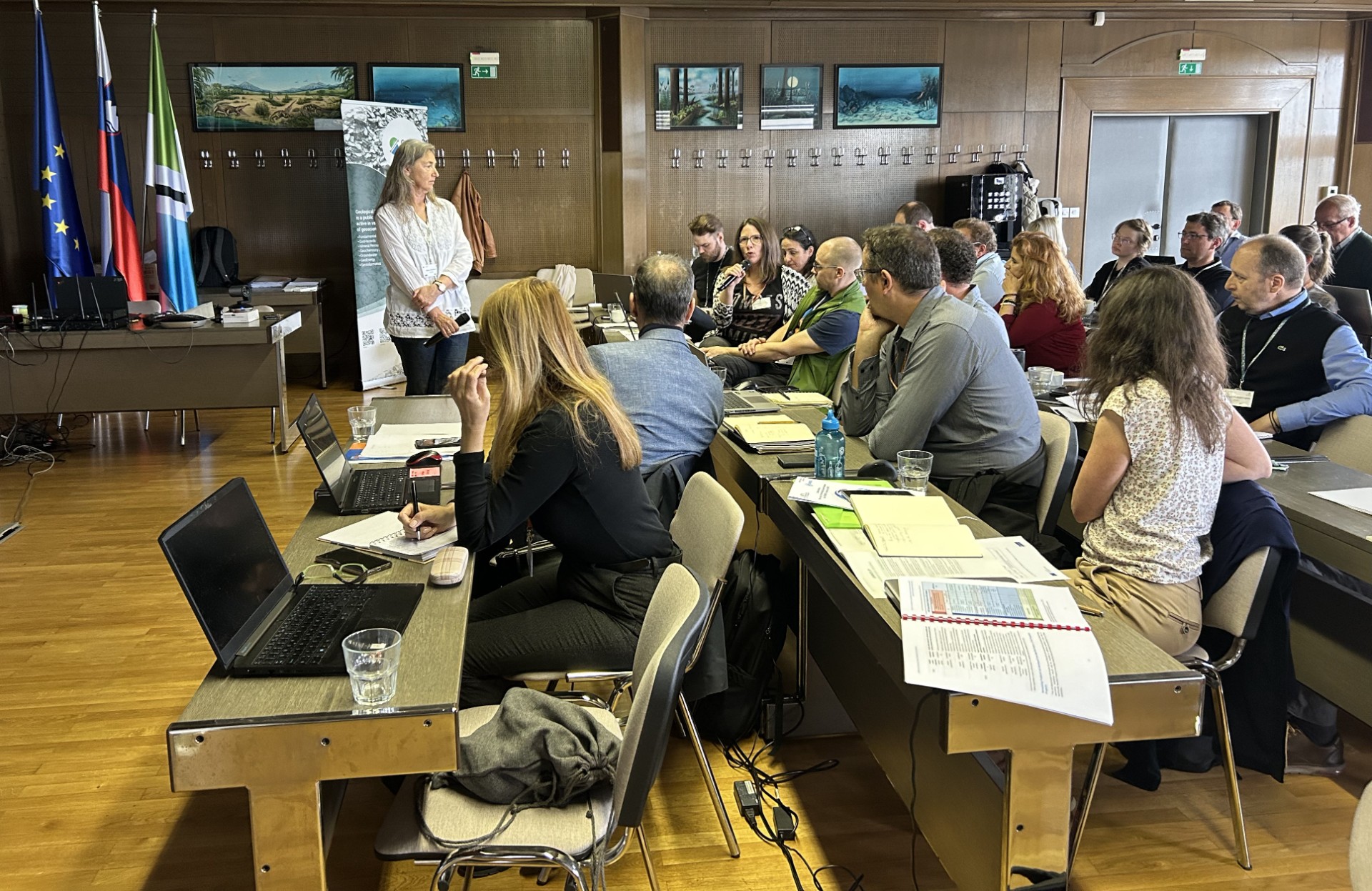
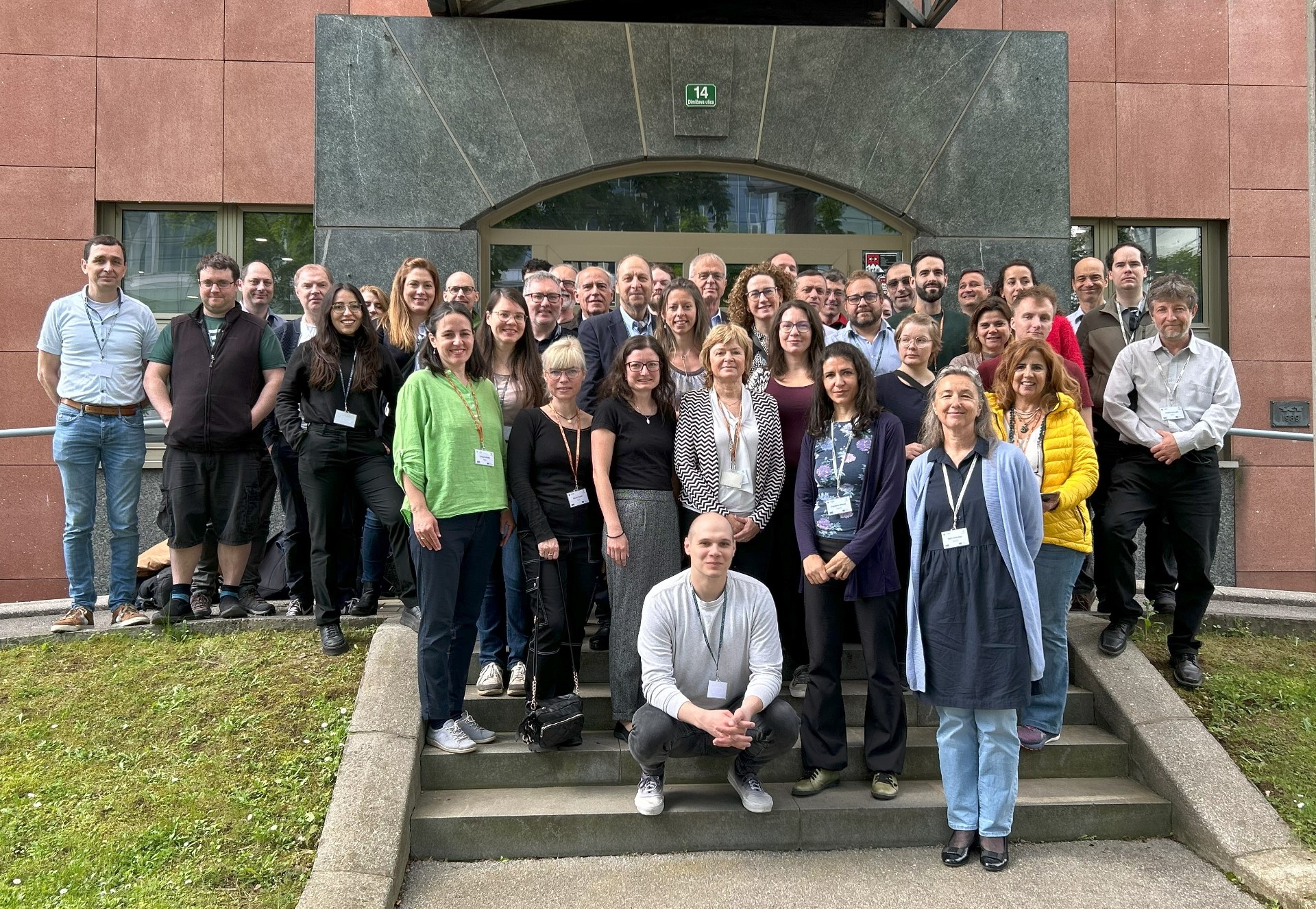
GSEU/ EU ICE SRM UNFC Training - level 2

May 14 – 15, 2024 | Ljubljana
Add to calendar

The main aim and focus of the trainings is to support critical raw material initiatives (CRM Act) to classify projects using UNFC and establish project inventories across Europe.

A program of systematic capacity building ensures that synergies are retained between the EU Member States and data on raw materials are collected consistently, and are of the required quality, across Europe. The development of UNFC capacity within the EU ICE SRM serves to facilitate and improve the handling and understanding in particular to: 

  • the further development of UNFC classified inventories across Europe that are consistent with the Infrastructure for Spatial Information in Europe (INSPIRE) for mineral resources;
  • the comparability in national resource reporting, in particular the way resource quantities are classified according to UNFC and linked to different EU instruments, such as INSPIRE.

The EU ICE SRM is taking a step-by-step approach to increase the necessary capacity in all related areas, starting with CRM.

Our first target group are experts who are trained to become trainers. The trainings will be implemented in three level approach.

Level 2 – User need specifics (suitable for practitioners, builds up on Level 1 training)

Topics:

  • Using and developing bridging documents
  • Reporting in line with CRMA requirements
  • Case specific hands-on exercises
  • Exercise on using the UNFC templates

Training materials

Recap of Level 1 Training (Snježana Miletić, GeoZS)

CRMA update (Antje Wittenberg, BGR)

Quiz 

Historic Estimates (Tuomas Leskelä, GTK)

CRIRSCO-UNFC Bridging Case Study (Janne Hokka, GTK)

Bridging methodology - Introduction and Czech National System to UNFC (Zbyněk Gabriel, CGS)

Bridging methodology - Slovenian ABC to UNFC (Duška Rokavec, GeoZS)

Bridging methodology - Bridging the Hungarian National System to UNFC (Zoltán Horváth, SARA)

Bridging methodology - Bridging the Austrian National System to UNFC (Sebastian Pfleiderer, GSA)

UNFC Case studies - Norway (Janja Knežević Solberg, NGU)

UNFC Case studies - Slovenia (Duška Rokavec, GeoZS)

UNFC Case Studies - Germany (Antje Wittenberg, BGR)

Experience of using and classification harmonizing UNFC in Ukraine (Mariia Kurylo, UAG)

Please contact [email protected] for more information about the training.
Back

What's New

External
  Event
Jun 8–11
June 8 – 11, 2026Calgary, Canada
MORE
Internal
  Event
Sep 8
September 8, 2026Brussels, Belgium
MORE
June 5, 2026

🌍 On World Environment Day, we celebrate the power of geological knowledge to support climate action and strengthen Europe's resilience. Our EuroGeoSurveys community works together to provide the harmonised geoscience data and expertise needed to support informed environmental, social, and econom...

Show post on LinkedIn
June 3, 2026

Europe's subsurface is a strategic asset that supports a wide range of societal needs, including renewable energy, energy storage, groundwater resources, and raw materials. 💡 In our new position paper, we call for a comprehensive approach to integrated surface and subsurface management within lan...

Show post on LinkedIn
June 2, 2026

♨️ The Pan-European Atlas of Sustainable Geo-Energy Capacities is heading to the World Geothermal Congress 2026 in Calgary, Canada! Join Ignasi Herms to discover the latest advances in harmonised geothermal knowledge across Europe. From extensive datasets on boreholes, wells and thermal springs t...

Show post on LinkedIn
June 2, 2026

📍 A productive week starts in Brussels: we are delighted to welcome the chairs of the EuroGeoSurveys Expert Groups for two days of meetings. Joining them today are colleagues from the GSEU - Geological Service for Europe project team to discuss priorities for advancing geological knowledge and su...

Show post on LinkedIn
June 1, 2026

🌍 How can geothermal energy move from niche to mainstream in Europe? Wa are pleased to contribute to the workshop organised by International Energy Agency (IEA) and Carnegie Europe taking place this week. Julie Hollis will join the discussion on how innovation, policy, regulation and industrial c...

Show post on LinkedIn
May 20, 2026

🚨 New publication alert! What can we learn from abandoned mining areas? Quite a lot. A new study of the old Preguiça mine (Beja, Portugal), formerly exploited for Fe-Zn-Pb, highlights why revisiting abandoned mining sites matters for sustainable resource management and strategic raw materials pla...

Show post on LinkedIn