New Contributions to Mineralogical and Geochemical Knowledge of Old Preguiça Mine, Beja, Portugal

May 19, 2026

Silva, T.P.; Morais, I.; Soares, S.; Rodrigues, I.; de Oliveira, D.P.S.; Mirão, J. New Contributions to Mineralogical and Geochemical Knowledge of Old Preguiça Mine, Beja, Portugal. Minerals 2026, 16, 348. https://doi.org/10.3390/min16040348

Abstract

Abandoned mining areas provide valuable opportunities to investigate ore-forming processes, supergene mineral transformations, and the geochemical behaviour of metals. In this sense, the old Preguiça mine (Beja, Portugal), exploited for Fe–Zn–Pb, was studied providing new mineralogical and geochemical data aimed at improving the understanding of the secondary mineral assemblages of this deposit. A total of 70 samples collected from three accessible underground levels (first, second and third) and mine waste, complemented by 16 samples from a deeper level (fourth) previously collected, were analysed using X-ray diffraction (XRD), scanning electron microscopy (SEM), and a portable X-ray fluorescence (pXRF) equipment. Mineralogical phases are dominated by a wide range of secondary oxides, carbonates, arsenates, vanadates, silicates, phosphates and sulphates, but remnants of primary sulphides were also found. The following minerals can be emphasised: goethite, hematite, calcite, dolomite, descloizite, willemite, mimetite, cerussite, smithsonite and fraipontite. The presence of massicot in the Preguiça mine, is described for the first time. Bulk geochemical analyses show high concentrations of Fe, Ca, Zn and Pb, consistent with the observed mineralogy. The presence of vanadium- and arsenic-bearing minerals highlights the occurrence of critical raw materials, supporting the importance of reassessing other abandoned mining areas in the context of sustainable resource management and strategic raw-material planning.

Keywords:

Preguiça mine; mineral phases; pXRF; historical Fe–Zn–Pb deposit; abandoned mine; Portugal

Back
July 31, 2026

🥶 Not your typical summer holiday video? Understanding Europe's coastlines is a year-round effort, whether the beaches are busy or not. We continue building the geological knowledge that supports the sustainable management and protection of Europe's coastal environments, so we can all enjoy them ...

Show post on LinkedIn
July 28, 2026

Carbon Capture and Storage is expanding as part of Europe's path to net zero. But storing CO₂ begins long before injection. It starts with understanding where suitable geological formations exist, how much CO₂ they can store, and how they can be monitored over time. Our GSEU pan-European CO₂ Stor...

Show post on LinkedIn
July 25, 2026

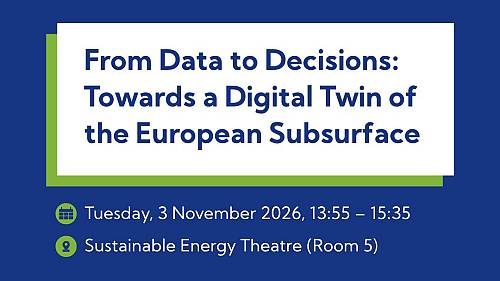
Across Europe, the subsurface is increasingly being recognised as a strategic asset that is critical for energy transition, resource security and environmental resilience. Together with partners, BGS is reshaping how geological knowledge is generated and strengthening collaboration across borders...

Show post on LinkedIn
July 22, 2026

☀️ Looking for a summer read? Discover how minerals make modern life possible, from the products and technologies we rely on every day to the resources needed for a resilient and sustainable future. Minerals in Your Life is available as a free e-book. Download your copy and explore the fascinatin...

Show post on LinkedIn
July 8, 2026

Europe has set ambitious goals for Critical Raw Materials. Achieving them starts with understanding Europe's geology, long before investment decisions are made, permits are issued, or exploration begins. Better geological knowledge reduces uncertainty, strengthens decision-making, and reveals Eur...

Show post on LinkedIn
July 3, 2026

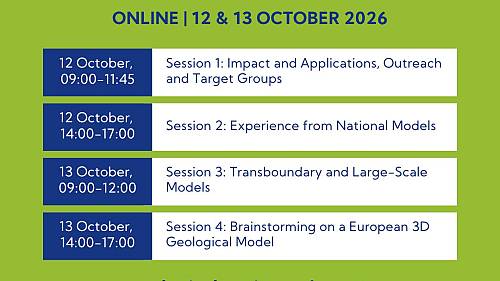
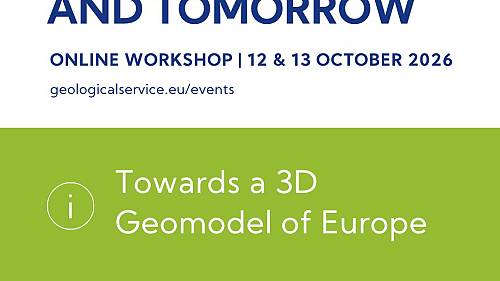
Before you switch on your out-of-office, take a moment to save the date! 𝐖𝐨𝐫𝐤𝐬𝐡𝐨𝐩: 𝐓𝐨𝐰𝐚𝐫𝐝𝐬 𝐚 3𝐃 𝐆𝐞𝐨𝐦𝐨𝐝𝐞𝐥 𝐨𝐟 𝐄𝐮𝐫𝐨𝐩𝐞 📅 12-13 October 2026 | Online Expect discussions on national and transboundary 3D geological modelling initiatives, and on the path towards a harmonised European 3D geomodel. More in...

Show post on LinkedIn